Concealed Carry in Kansas: Experts Respond

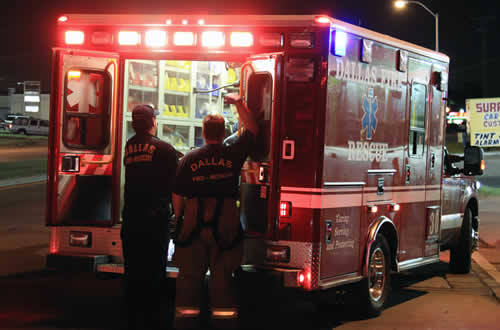
A Kansas law, which became effective on July 1, 2016, makes it legal for firefighters and EMS personnel to have a concealed carry weapon while on duty. The only exception is for school zones or private buildings specifically marked or designated as ‘gun free.’ Public employers, such as city and county governments, cannot prohibit their employees from carrying on duty. We asked EMS1 columnists to react … Continue reading Concealed Carry in Kansas: Experts Respond

2016 EMS Trend Report: Expert Analysis

I was included in a panel of experts that were asked to respond to questions on the 2016 EMS Trend Report published by Fitch & Associates in coorperation with EMS1 and NEMSMA. Read the other responses here.    1. Which State of EMS 2016 finding surprised or interested you most?  Two things stood out to me. First, almost half of the organizations were able to implement hypothermia protocols, … Continue reading 2016 EMS Trend Report: Expert Analysis

Writing Q & A

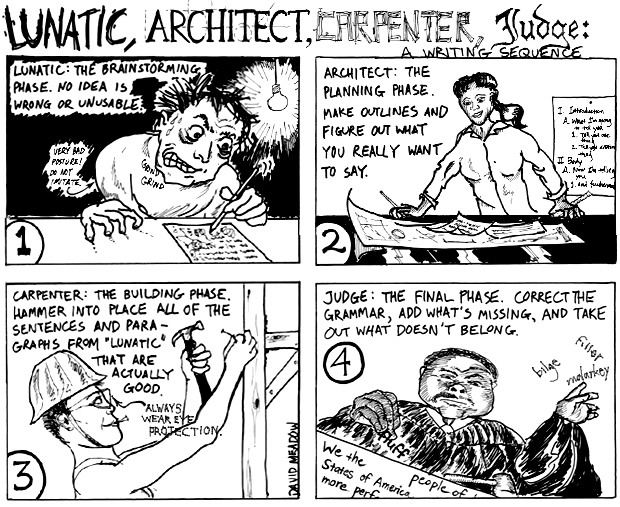
Writing is a strangely individualistic sport. As such it requires a certain level of personal reflection on what works and what doesn’t.  In an effort to not utterly bias my recent EMS1 article on the topic, I decided to poll a handful of writers beyond myself (CC) to see what works for them. You can read more about each of them here: Raphael M. Barishansky (RB) Ari … Continue reading Writing Q & A

AcademyHealth Annual Research Meeting 2016

This was my third time attending AcademyHealth‘s Annual Research Meeting (ARM), but it was my first time feeling like I wasn’t lost in the crowd.  For a conference with nearly 3000 attendees who all like looking at how healthcare works, it can be hard to find where you belong. My current conference modus operandi – I love the plenary sessions, I don’t go to paper sessions unless I … Continue reading AcademyHealth Annual Research Meeting 2016

Dallas Fire-Rescue Community Paramedicine Program

My immediate reaction to seeing that revenues for the DallasFire-Rescue’s community paramedicine program were “below expectations” was anything but surprise. In fact, anyone surprised by this news doesn’t have realistic expectations of novel EMS business models. The reality is that community paramedicine programs across the country are learning how to be self-sufficient. Fire and EMS administrators are being forced to look at their balance sheets and bank … Continue reading Dallas Fire-Rescue Community Paramedicine Program

Alarm Fatigue in EMS

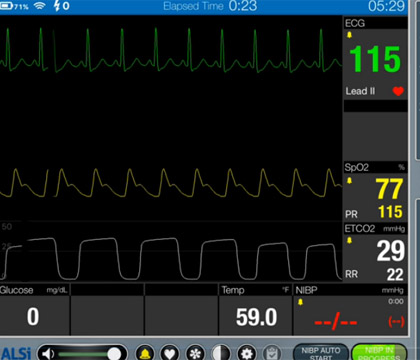
Fatigue within EMS is usually described in terms of a provider’s ability to get enough sleep. But there are other types of fatigue in health care, the study of which has remained siloed within brick and mortar facilities, resulting in a generic lack of focus from the EMS industry. These types of fatigue are real, and they have real, sometimes deadly, consequences. Defined as “sensory overload … Continue reading Alarm Fatigue in EMS

National Rural EMS Conference

I recently had the pleasure of attending the National Rural EMS Conference in San Antonio, Texas.  This conference was one of the smallest I’ve ever attended, but it provided a unique view of the concerns rural EMS providers may have that don’t reflect those of their urban counterparts. Since it was hosted by the National Organization of State Offices of Rural Health, you can find all the slides online for free here. I also had the … Continue reading National Rural EMS Conference

Sexy CPR training video misses its mark

A German social welfare and first aid organization has produced a video that some news outlets have called “sexy” to raise awareness of bystander CPR. The five minute video is a compilation of modern pop songs whose lyrics have been changed to explain the benefits and mechanics of compression only CPR. Although the campaign attempts to connect with people 25 and younger by using songs like Robin Thicke’s “Blurred Lines”, … Continue reading Sexy CPR training video misses its mark

The evolving war on opioids

Prehospital providers are on the front lines of the current opioid addiction epidemic. Those that have yet to experience the power of saving a life with a simple bolus of naloxone likely won’t have to wait long given that over 28,000 people died in 2014, and an additional 2.2 million Americans currently struggle with opioid addiction. President Obama recently attended the National Rx Drug Abuse … Continue reading The evolving war on opioids

Improve CPR with systems thinking

There are ten cellular processes that must continue to function in order for the human body to survive cardiac arrest. While each of these processes is critically important, all require intra- and inter-organizational systems to be in place in order to guarantee success. The chain of survival exists for a reason. As a representation of the links that are required to connect an unfortunate start to a … Continue reading Improve CPR with systems thinking